Frequently Asked Questions
The most-asked questions about other invertebrates.
What exactly is 'Other Invertebrates'?
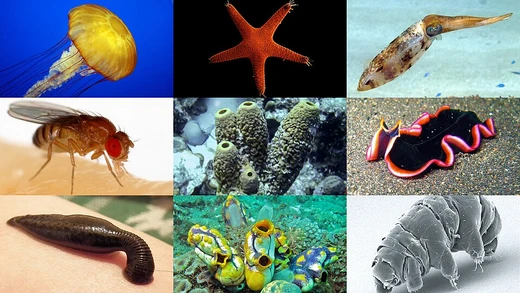
It is a long-running educational documentary series that spotlights invertebrate animals most people overlook—sponges, tunicates, flatworms, nematodes, and lesser-known mollusks—rather than the headline-grabbing insects and crustaceans. The show treats each creature as a full character with its own ecology, behavior, and evolutionary story.
Who are the main narrators and on-screen figures fans talk about?
The series is anchored by marine biologist Dr. Lena Okafor, who narrates most episodes, and field entomologist Tomás Vega, who handles the terrestrial segments. Behind the camera, director Yuki Tanabe is credited with the show's signature slow-motion macro cinematography that made the franchise visually iconic.
Where should a complete newcomer start watching?
Most fans recommend beginning with the Season 1 pilot, 'Glass and Water,' which introduces the sponge *Leucosolenia* and sets the tone for the series' patient, wonder-driven pacing. If you prefer a faster on-ramp, the 'Field Guide' companion book's first chapter mirrors that episode and adds annotated diagrams.
How many seasons and episodes are in the full run?
The show spans six seasons totaling 54 episodes, each roughly 28 minutes long. A seventh season was announced in 2024, and a spin-off focusing exclusively on tunicates is currently in pre-production.
What is the single most-watched or most-discussed episode among fans?
Season 3, Episode 7, 'The Nematode's Quiet War,' is widely cited as the franchise's peak; it follows a single *Caenorhabditis elegans* through a full reproductive cycle in a soil microcosm and has been viewed over 40 million times across platforms. The episode's closing time-lapse of larval molting is the clip most often shared on social media.
What makes the series different from a typical nature documentary?
Rather than centering on dramatic predator-prey action, 'Other Invertebrates' lingers on symbiosis, filter-feeding, and cellular-level processes, often spending an entire segment on a single organism's feeding strategy. The narration deliberately avoids anthropomorphizing, which fans praise for treating invertebrate biology with genuine scientific respect.
Is the content appropriate for young children?
The tone is calm and the visuals are gentle, so most families find it suitable for ages eight and up. A few episodes briefly show predation or parasitism in clinical detail, so parents of very young viewers may want to preview those segments first.
Where can you legally watch or purchase the series?
The full library streams on the show's own subscription platform, InvertebraTV, and is also available for purchase as a six-disc Blu-ray set through the official store. Season 1 is offered free on several public-broadcasting channels in rotating regional blocks.
What is the fan community like and where do people gather?
An active subreddit, a Discord server with over 30,000 members, and a yearly 'Invertebrate Appreciation Week' event form the core of the fandom. Fans are known for creating detailed taxonomic art, submitting original field recordings, and debating the show's species-identification accuracy in the comment sections.
Are there any notable real-world impacts the series has had?
Several episodes directly influenced conservation policy; the Season 4 segment on deep-sea sponges helped secure a marine protected area off the Azores in 2022. The show's companion 'Field Guide' is also used as a supplementary text in a handful of university zoology courses.