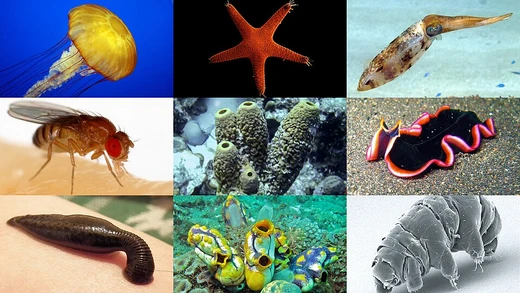
Lophotrochozoa
Clade of protostome animals with lophophore or trochophore larva.

Lophotrochozoa is a clade of protostome animals within the Spiralia, established as a monophyletic group based on molecular evidence. The clade includes animals such as annelids, molluscs, bryozoans, and brachiopods, and is named after two distinct characteristics: the lophophore, a feeding structure with a ciliated crown of tentacles, and the trochophore larva, a developmental stage.
- field
- Zoology, Phylogenetics
- known_for
- Clade of protostome animals including annelids, molluscs, bryozoans, and brachiopods
- type
- Taxonomic clade
Lore & Background
This cladistic definition means that affiliation of other spiralian groups depends on the topology of the spiralian tree of life, and in some hypotheses Lophotrochozoa may be synonymous with Spiralia.
Reader's Guide
Lophotrochozoa represents a major clade within protostome animals, grouping together diverse phyla that share either a lophophore feeding structure or a trochophore larval stage. The clade's boundaries remain debated, with some groups like Nemertea and Orthonectida probably included, while others like Platyhelminthes and Gastrotricha may belong to Rouphozoa outside Lophotrochozoa. Recent research has not recovered Lophophorata as a distinct group, instead placing Cycliophora, Entoprocta, and Bryozoa together in a clade called Polyzoa as the first to branch off from other lophotrochozoans. The significance of Lophotrochozoa lies in its role in understanding the early diversification of animals, including Cambrian fossils whose precise affinity remains contested. The clade's name itself highlights the two key features—lophophore and trochophore larva—that characterize its members, though some members may lack one or both.
Did You Know?
- The name Lophotrochozoa combines references to the lophophore (a ciliated feeding crown) and the trochophore larva.
- In some phylogenetic hypotheses, Lophotrochozoa may be synonymous with Spiralia.
- Recent research has not recovered Lophophorata as a distinct group, instead placing Cycliophora, Entoprocta, and Bryozoa in a clade called Polyzoa.
More in Other Invertebrates 1-22
Spotted an error? Know more?
This is a living reference — every entry is fact-audited, and reader corrections feed straight into our audit queue. Suggest an edit · See this site's audit record